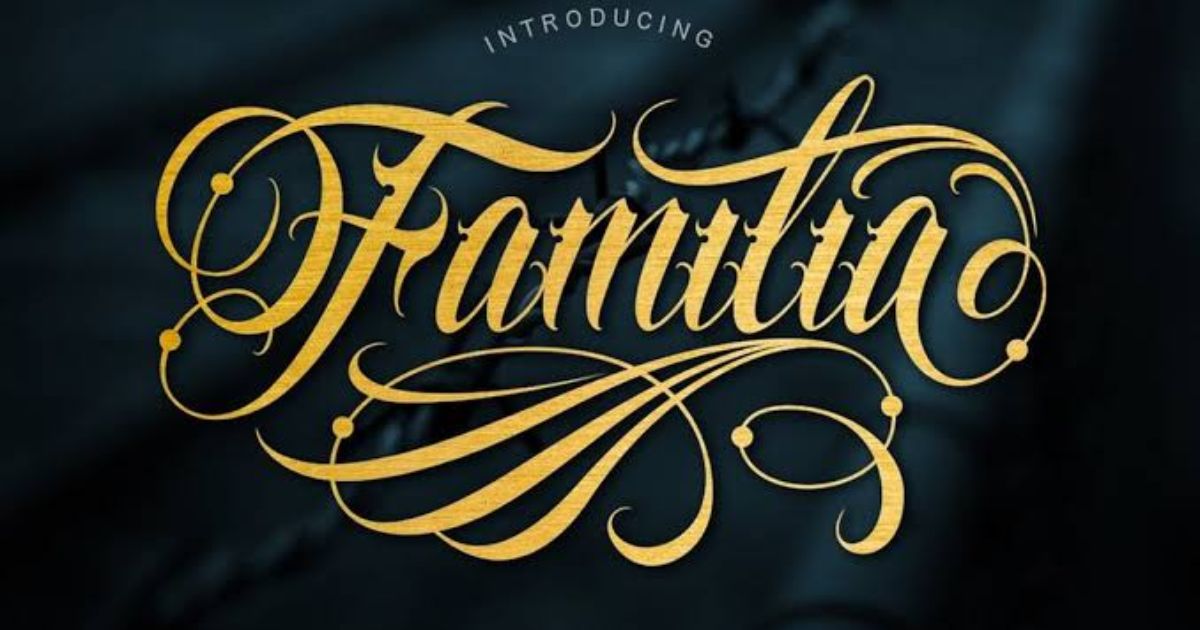

Tattoo fonts can completely change the feeling of a tattoo. The same name, quote, date, or word can look elegant, bold, romantic, dark, modern, or personal depending on the lettering style.
Some people love delicate cursive fonts. Others prefer bold Gothic letters, clean minimalist text, classic serif fonts, or custom handwriting. The best choice depends on your tattoo idea, placement, size, and personal style.
A good tattoo font should also be readable. A font that looks beautiful on a screen may not work well when placed very small on skin. Tattoo artists often adjust spacing, stroke weight, and letter shapes to help the design remain clear as the ink ages.
What Are Tattoo Fonts?
Tattoo fonts are lettering styles used to create words, names, dates, quotes, numbers, and phrases for tattoos. They can be based on traditional typefaces or created specifically by an artist.
Popular categories include script, cursive, Gothic, Old English, serif, sans-serif, handwritten, minimalist, and traditional tattoo lettering.
The font should match both the meaning of the tattoo and the body placement. A romantic name may look beautiful in flowing script, while a powerful single word may work better in bold blackletter.
Best Tattoo Fonts
There is no single best font for every tattoo. Different styles work for different designs.
| Font Style | Best For | Overall Look |
| Script | Names and short quotes | Elegant |
| Cursive | Love and personal phrases | Romantic |
| Gothic | Strong words and names | Dark and bold |
| Old English | Names and statements | Traditional |
| Serif | Quotes and dates | Classic |
| Sans-serif | Minimal tattoos | Modern |
| Handwritten | Personal messages | Natural |
| Fine-line | Small words | Delicate |
| Typewriter | Quotes and literary text | Vintage |
| Brush | Creative phrases | Artistic |
| Chicano lettering | Names and statements | Detailed |
| Traditional lettering | Classic tattoo designs | Timeless |
Script Tattoo Fonts

Script is one of the most popular choices for lettering tattoos. It uses flowing letters that connect or appear connected.
Script works particularly well for names, romantic words, memorial tattoos, and short inspirational phrases.
A good script tattoo needs enough space between letters. Extremely thin and tightly connected lettering can become difficult to read as the tattoo ages.
Best for:
- Names
- Love quotes
- Family names
- Memorial tattoos
- Short phrases
- Inspirational words
- Dates
Cursive Tattoo Fonts
Cursive tattoo fonts have a soft and handwritten appearance. They can make a simple word feel personal and elegant.
This style is popular for feminine tattoos, couple tattoos, names, and meaningful phrases. It can also be customized to look like real handwriting.
For better long-term readability, avoid making the letters extremely small or placing too many flourishes close together.
Gothic Tattoo Fonts
Gothic fonts create a dramatic and powerful appearance. They usually feature strong strokes, sharp shapes, and decorative letterforms.
Gothic lettering works especially well for short words because the details can become crowded when a long sentence is squeezed into a small space.
Good ideas include:
- Strength
- Family names
- Faith
- Fearless
- Loyalty
- Warrior
- Memorial words
- Band names
Gothic and blackletter styles can be highly readable when they are given enough size and spacing.
Old English Tattoo Fonts
Old English is a classic tattoo lettering choice. It has bold, dramatic shapes and a strong traditional appearance.
It is often used for names, single words, dates, religious phrases, and powerful statements.
Because the letterforms can be complex, Old English usually looks better at a medium or larger size. Trying to squeeze many words into a tiny area can reduce readability.
Minimalist Tattoo Fonts
Minimalist fonts are simple, clean, and modern. They usually avoid decorative details and focus on easy-to-read letterforms.
This style is ideal for people who want a subtle tattoo rather than a large statement piece.
Popular minimalist ideas include:
- One-word tattoos
- Initials
- Dates
- Coordinates
- Roman numerals
- Short quotes
- Small names
- Simple numbers
Sans-serif lettering is particularly useful when clarity and a modern appearance are priorities.
Fine-Line Tattoo Fonts

Fine-line fonts have thin strokes and a delicate appearance. They can look beautiful, especially for small personal tattoos.
However, very thin lettering needs careful planning. Fine details can soften over time, and narrow spaces inside letters can become less clear.
If you want fine-line lettering, discuss the size and placement with your tattoo artist before choosing the final font. A slightly larger design may preserve the look better over time.
Handwritten Tattoo Fonts
Handwritten tattoos are especially meaningful because they can be based on someone’s actual handwriting.
You might use handwriting from:
- A parent
- Grandparent
- Partner
- Child
- Friend
- Yourself
You can bring a clear handwritten sample to your artist. The artist can then adapt the writing to fit the body while keeping its original character.
A clean, high-contrast handwriting sample makes it easier for the artist to reproduce the lettering accurately.
Serif Tattoo Fonts
Serif fonts have small finishing strokes on letters. They often create a classic and formal appearance.
They are a good choice for literary quotes, dates, Latin phrases, memorial tattoos, and meaningful statements.
Serif lettering can feel timeless rather than trendy, making it suitable for tattoos you want to keep visually classic.
Sans-Serif Tattoo Fonts
Sans-serif fonts have clean letterforms without decorative finishing strokes.
They are simple and highly readable. This makes them useful for modern tattoos, coordinates, dates, initials, and short words.
They can also work well for people who prefer a gender-neutral tattoo style.
Typewriter Tattoo Fonts
Typewriter fonts give tattoos a literary and vintage feeling.
They are especially popular for:
- Book lovers
- Writers
- Poets
- Movie quotes
- Lyrics
- Short poems
- Personal statements
A typewriter-style tattoo can look especially good on the forearm, ribs, upper back, or chest.
Traditional Tattoo Lettering
Traditional tattoo lettering often uses bold lines and strong shapes. It pairs naturally with classic tattoo imagery such as roses, hearts, banners, anchors, daggers, and birds.
The lettering can be placed inside a banner or used separately as a name or phrase.
Bold traditional lettering can also offer good readability because strong strokes remain visually clear as the tattoo ages.
Chicano Tattoo Fonts
Chicano lettering is known for elegant but detailed script, Gothic influences, dramatic shadows, and decorative flourishes.
It is often used for names, religious words, family tributes, memorial tattoos, and meaningful statements.
Because this style can contain considerable detail, choosing an experienced lettering artist is important. The artist can adjust the design to your skin and available space.
Tattoo Fonts for Names
Names are among the most common lettering tattoos.
The right font depends on the feeling you want.
Elegant: Script or cursive
Strong: Gothic or Old English
Simple: Sans-serif
Classic: Serif
Personal: Handwriting
Vintage: Typewriter
For a name tattoo, do not choose a font only because it looks attractive on a computer. Test the actual name at the size you plan to tattoo.
Tattoo Fonts for Quotes

Quotes usually need more space than single words.
A clean serif or sans-serif font can make longer text easier to read. Script can also work, but the artist needs enough room to maintain spacing between letters.
If your quote is long, consider using a larger body area instead of shrinking the text.
Keeping the wording short often creates a cleaner and more readable tattoo.
Tattoo Fonts for Dates
Dates can look great in many styles.
Popular choices include:
- Minimalist numbers
- Roman numerals
- Serif numbers
- Typewriter numbers
- Handwritten dates
- Small script
- Bold block numbers
A date tattoo can represent a birthday, anniversary, wedding, important achievement, or the memory of someone special.
Always check the date carefully before the tattoo session.
Tattoo Fonts for Roman Numerals
Roman numerals have a timeless appearance. They are often used for birthdays, anniversaries, memorial dates, and important life events.
Serif lettering usually works particularly well with Roman numerals because it creates a classical appearance.
Common placements include the forearm, wrist, collarbone, ribs, chest, and upper back.
Tattoo Fonts for One-Word Tattoos
One-word tattoos give you more freedom with font selection because you do not need to fit a long sentence into a limited space.
Popular words include:
- Believe
- Breathe
- Fearless
- Strength
- Hope
- Love
- Faith
- Family
- Freedom
- Courage
- Warrior
- Enough
- Healing
- Dream
- Rise
A single word can be done in script, Gothic, serif, sans-serif, handwriting, or custom lettering.
Tattoo Fonts for Women
There is no rule that says a particular font belongs to women, but some styles are commonly chosen for softer tattoo designs.
Popular choices include:
- Fine script
- Cursive
- Handwriting
- Minimalist
- Elegant serif
- Delicate lettering
- Floral lettering
These fonts can be combined with flowers, butterflies, stars, hearts, moons, or other meaningful symbols.
Tattoo Fonts for Men
Many men choose strong and structured lettering styles, but tattoo fonts are not limited by gender.
Popular choices include:
- Gothic
- Old English
- Blackletter
- Bold serif
- Traditional lettering
- Chicano lettering
- Bold sans-serif
- Typewriter
A simple word can look powerful without needing a highly complicated font.
Best Tattoo Fonts for the Wrist
The wrist has limited space, so short text usually works best.
Good choices include:
- Minimalist sans-serif
- Small serif
- Simple handwriting
- Short script
- Initials
- Roman numerals
Avoid trying to fit a long quote into a very small wrist tattoo. Tiny lettering can lose readability over time.
Read More:Owl Tattoo: Meaning, Symbolism, Designs, and Placement Ideas
Best Tattoo Fonts for the Forearm
The forearm is one of the most versatile locations for lettering.
You can use:
- Script
- Gothic
- Old English
- Serif
- Sans-serif
- Handwriting
- Typewriter
- Chicano lettering
The relatively flat surface also gives the artist room to create balanced spacing.
Best Tattoo Fonts for the Rib
The ribs provide enough length for longer quotes and vertical lettering.
Elegant script, serif, handwritten, and typewriter styles can all work well.
The main consideration is pain. Rib tattoos are often considered more uncomfortable than tattoos placed on more padded areas.
Best Tattoo Fonts for the Spine

Vertical lettering can create a striking spine tattoo.
Possible styles include:
- Minimalist
- Gothic
- Script
- Roman numerals
- Typewriter
- Custom handwriting
Because the spine is a narrow and bony area, the font and size need to be planned carefully.
Best Tattoo Fonts for the Neck
Short words and names can work well on the neck.
Popular options include:
- Small script
- Minimalist lettering
- Bold lettering
- Gothic
- Handwritten
The neck is highly visible, so consider how the tattoo will look with different clothing and hairstyles.
Best Tattoo Fonts for Fingers
Finger tattoos usually need extremely simple lettering.
Good options include:
- Block letters
- Small sans-serif
- Simple initials
- Short words
- Minimal symbols
Highly detailed script can be difficult to maintain on such a small and high-use area. Hands and fingers also experience frequent friction and movement, which can affect lettering over time.
Tattoo Font Size Guide
Font size is just as important as font style.
A very small font may look perfect on a phone or computer screen but become difficult to read when transferred to skin.
| Font Type | General Size Consideration | Aging Risk |
| Bold block | Can work smaller | Lower |
| Simple serif | Small to medium | Lower |
| Sans-serif | Small to medium | Lower |
| Standard script | Medium | Moderate |
| Cursive | Medium | Moderate |
| Gothic | Medium to large | Moderate |
| Ornate script | Large | Higher |
| Fine-line script | Larger is safer | Higher |
Current lettering guides emphasize that thicker strokes, open letter shapes, and adequate spacing generally provide better long-term readability. Exact sizing should be decided with your tattoo artist because skin, placement, and the specific design all matter.
Why Tattoo Font Spacing Matters
Spacing is easy to ignore when choosing a font, but it can make a major difference.
Letters placed too close together may visually merge as the tattoo ages. Small enclosed spaces inside letters can also become less distinct.
A good tattoo artist can adjust kerning, spacing, line weight, and letter proportions instead of simply copying a computer font.
This is one reason a professional tattoo stencil should be reviewed at the actual size before the tattoo begins.
How to Choose the Right Tattoo Font
Start with the meaning of your tattoo.
Ask yourself what feeling you want the lettering to create. Do you want it to look elegant, powerful, romantic, mysterious, classic, modern, or personal?
Then think about the placement.
A tiny wrist tattoo needs a different font from a large back tattoo. A long quote needs more space than a single word.
Finally, think about aging. A beautiful font is not useful if the letters become difficult to read later.
Common Tattoo Font Mistakes
Choosing a Font That Is Too Small
This is one of the biggest mistakes with lettering tattoos. Small letters have less room for the ink to remain visually separated.
Using Too Many Words
Long quotes often force people to make the lettering smaller.
If you want a long quote, consider using a larger placement.
Choosing a Font Only From a Screen
A font can look beautiful digitally but behave differently on skin.
Always test the actual wording and approximate size.
Ignoring Spelling
A spelling mistake in a tattoo is permanent until corrected or covered.
Check the wording several times. If the tattoo uses another language, have a fluent speaker verify it before the appointment.
Using Too Many Decorative Details
Extra flourishes can make lettering look beautiful, but too many details can reduce readability.
How to Preview Tattoo Fonts
One easy way to compare fonts is to type your exact tattoo wording into a font preview tool or design program.
Do not preview only the font name. Use the exact word, name, date, or quote you plan to tattoo.
Print or display the design at approximately the intended size. Look at it from a normal distance and check whether every letter is easy to recognize.
Then take the design to your tattoo artist. The artist can make changes for your body shape and placement.
Custom Tattoo Fonts vs Ready-Made Fonts
A ready-made font is quick and easy to preview.
A custom tattoo lettering design can be more personal because the artist can change individual letters, spacing, curves, and decorative elements.
Custom lettering is especially useful for handwriting tattoos, large script pieces, and designs that need to fit a specific body shape.
The final stencil should be treated as a tattoo design rather than simply a typed font.
Tattoo Font Style Comparison
| Style | Appearance | Best Use | Readability |
| Script | Flowing | Names | Good with enough size |
| Cursive | Soft | Love phrases | Moderate |
| Gothic | Dark and bold | Strong words | Good at larger sizes |
| Old English | Traditional | Names | Good at suitable sizes |
| Serif | Classic | Quotes | Very good |
| Sans-serif | Modern | Dates and words | Very good |
| Handwritten | Personal | Memorials | Depends on design |
| Fine-line | Delicate | Short words | More sensitive to aging |
| Typewriter | Vintage | Quotes | Good |
| Chicano | Detailed | Names and phrases | Good when properly sized |
| Traditional | Bold | Classic tattoos | Good |
Tattoo Font Ideas
If you are looking for inspiration, these combinations can help.
Name + Script: Elegant and personal.
Name + Gothic: Strong and dramatic.
Date + Serif: Classic and timeless.
Quote + Typewriter: Literary and vintage.
Word + Sans-serif: Modern and minimal.
Signature + Handwriting: Highly personal.
Roman Numerals + Serif: Classical.
Faith Word + Gothic: Bold and meaningful.
Family Name + Traditional: Classic tattoo style.
Short Quote + Cursive: Soft and expressive.
How Tattoo Fonts Age
All tattoos change as skin naturally ages. Lettering can be especially noticeable because the design depends on small spaces between lines.
Very thin strokes and tight details can become harder to distinguish. Bold lettering with enough negative space generally has an easier time remaining readable.
This does not mean every fine-line tattoo will become unreadable. It means font choice, size, spacing, placement, sun exposure, and individual skin all matter.
Tips for a Tattoo That Stays Readable
- Choose enough size for the font.
- Give letters enough breathing room.
- Avoid squeezing long quotes into tiny areas.
- Use a font that matches your placement.
- Check every spelling and date.
- Test the exact wording before the appointment.
- Look at the stencil from a normal distance.
- Ask your artist about long-term readability.
- Choose an artist experienced in lettering.
- Avoid copying a font without considering your body shape.
Tattoo Fonts FAQs
What is the best font for a tattoo?
The best font depends on your design. Script works well for names, Gothic works well for bold words, serif works well for classic quotes, and sans-serif is excellent for modern minimalist lettering.
What tattoo font lasts the longest?
Bold, clear lettering with enough spacing generally has better long-term readability than extremely thin and crowded lettering.
What is the best font for a name tattoo?
Script, cursive, handwriting, Gothic, and serif fonts are all popular choices. Choose based on whether you want the name to look elegant, personal, bold, or classic.
Are fine-line tattoo fonts a good idea?
They can be beautiful, but they need careful sizing and placement. Very thin lettering has less room for error as the ink settles and the skin ages.
What font is best for a small tattoo?
Simple sans-serif, bold block, or uncomplicated serif lettering can work well for small tattoos. Highly detailed scripts should generally be given more space.
Can I use someone’s handwriting as a tattoo font?
Yes. A clean handwriting sample can be adapted by a tattoo artist into a personal lettering tattoo.
Are Gothic tattoo fonts still popular?
Yes. Gothic and blackletter styles remain popular for bold names, words, and statements, especially when the tattoo has enough space for the detailed letterforms.
Should tattoo letters be close together?
Usually, lettering needs enough spacing to remain clear. Very tight spacing can make letters merge as the ink settles and ages.
Where is the best place for a lettering tattoo?
The forearm, upper arm, upper back, collarbone, and other relatively stable areas can work well. Fingers, hands, and feet may require more consideration because of movement and friction.
How do I choose a tattoo font?
Start with the meaning and mood of your tattoo. Then consider the wording, placement, size, readability, and how the font may age. Your tattoo artist can help modify the final lettering.
Conclusion
Tattoo fonts are more than decorative letters. The right font can change the entire personality of a tattoo.
Script and cursive styles are beautiful for names and romantic phrases. Gothic and Old English create a stronger appearance. Serif fonts offer a classic feeling, while sans-serif lettering gives a clean modern look. Handwritten fonts can make a tattoo deeply personal.
The most important thing is to choose a font that works on skin, not just on a screen. Give the letters enough space, choose an appropriate size, check every word carefully, and let an experienced tattoo artist adapt the design to your body.
A beautiful tattoo font should not only look good on the day you get it. It should remain meaningful and readable for years to come.