

A mental health tattoo turns a private fight into a visible reminder. It can mark survival, recovery, or support for someone you love. Few Research found that 32% of US adults have a tattoo, and 69% of tattooed adults say they got one to remember or honor someone or something. (Few Research Center)
This guide covers the most popular mental health tattoo ideas and what each symbol means. You’ll also learn about cost, pain, and tattoo aftercare. And you’ll find clear answers to questions like what does a semicolon tattoo mean?
What Is a Mental Health Tattoo?
A mental health tattoo is a design that stands for struggle, healing, hope, or mental health awareness. People choose these tattoos for different reasons:
- To mark a recovery milestone
- To keep a reminder on hard days
- To show support for a loved one
- To help break stigma
Can a mental health tattoo help you heal?
A tattoo can give your story a face. It can be a daily reminder of your resilience. But it is not treatment.
NAMI reports that more than 1 in 5 US adults (23.4%) live with a mental illness each year. (NAMI) So if you wear one of these designs, you’re in large company.
Popular Mental Health Tattoo Ideas and Their Meanings
Semicolon tattoo
The semicolon tattoo is the best-known mental health awareness tattoo. It stands for “my story isn’t over.” You’ll find the full history in the next section.
Butterfly, phoenix, lotus, moth, and koi tattoos
These symbols of transformation show up often in mental health recovery tattoos.
- Butterfly tattoo: A caterpillar changes completely before it can fly. The design stands for personal growth after hard times.
- Phoenix tattoo: The mythical bird rises from its own ashes. It stands for rebirth.
- Lotus flower tattoo: The lotus grows through mud and blooms above the water. It stands for resilience.
- Moth tattoo: Moths move toward light. Many see this as following hope through dark times.
- Koi fish tattoo: In the Dragon Gate legend, a koi swims up a waterfall and becomes a dragon. It stands for perseverance.
Anxiety tattoos
An anxiety tattoo works best as a quick visual cue. Many people place it on the wrist or finger so they can glance down in a stressful moment.
- “Breathe”: A reminder to slow your breathing during a panic attack or a stressful day.
- “Be Still”: A prompt to stay present when your thoughts race.
- Lavender: A plant known for its calming scent. Many choose it as a quiet nod to anxiety.
- Seated meditator: Stands for mindfulness and focus on what you can control.
- Unalome: A Buddhist symbol for the winding path to enlightenment.
Read More:Elephant Tattoo: Meaning, Designs, Ideas, and Placement Guide
Depression tattoos and recovery tattoos
A depression tattoo often leans on light, time, or chemistry.
- Serotonin molecule: A line drawing of the chemical structure. Many antidepressants work on serotonin, so wearers use it to fight stigma around medication.
- Sunrise or sun: A reminder that hard days pass.
- “This Too Shall Pass”: An old Persian adage about change.
- Heartbeat line: A reminder that you’re still here.
- “You Are Enough”: A direct counter to harsh negative self-talk.
Strength and survival tattoos

- Broken chain: Freedom from trauma or from a label.
- Barbed wire: Surviving pain, or building protection around yourself.
- “And Still I Rise”: A line from Maya Angelou’s poem about getting back up.
- Green ribbon: The international symbol for mental health awareness.
Tattoos for specific conditions
- ADHD tattoo: Often a line-art design of a busy, scattered mind.
- Spoon theory tattoo: A spoon design that stands for limited daily energy with chronic illness.
- Eating disorder recovery tattoo: Some wear a recovery symbol linked to a national eating disorder group.
- Overthinking head: A face with spirals or fog, used for anxiety, bipolar disorder, or OCD.
Self-harm cover-up tattoos
A self-harm cover-up tattoo can turn a mark of pain into a symbol of growth. Common choices include roses, dandelions, and phoenixes.
Wait until the skin has fully healed. Scar tissue can hold ink differently, so pick an artist who has done cover-ups. It also helps to talk with a doctor or therapist first.
Semicolon Tattoo Meaning: Where It Came From
What does a semicolon tattoo mean? It means your story continues. In writing, a semicolon lets an author keep going when they could have stopped.
Amy Bleuel started Project Semicolon in 2013 to honor her father, Mental Health Tattoo Ideas who died by suicide. (Project Semicolon) Soon, people worldwide began tattooing the mark on their wrists, ankles, and behind their ears.
Design ideas:
- A semicolon shaped like a heart
- A semicolon with a butterfly
- A semicolon made from a heartbeat line
- A semicolon growing into a flower
If you or someone you know is struggling right now, call or text 988 to reach the 988 Suicide & Crisis Lifeline.
What Do 222, 444, and 777 Tattoos Mean?
These are angel number tattoos. They come from spiritual belief, not from science or clinical practice. Most people read them like this:
- 444: Protection and support
- 777: Luck and spiritual awakening
- 222: Balance and harmony
Many people also use numbers for personal dates, like the day they started recovery.
3 Dots, 3 Teardrops, and 2% Tattoos: What to Know First
These designs often come up in searches, but they are not standard mental health symbols. Each has a strong cultural meaning.
- Three dots: Often read as “mi vida loca” (“my crazy life”) in Chicano and prison culture. Some people read them as past, present, and future.
- Teardrop: Can mean grief for a lost loved one. In some circles, it carries prison or gang meaning.
- 2% tattoo: Often used in addiction recovery circles. The origins are unclear, so ask the wearer what it means to them. Don’t mix it up with the “1%” outlaw biker tattoo.
Check how a design is read in your community before you ink it.
How to Choose the Right Mental Health Tattoo
- Start with your story. Ask what you want it to say.
- Pick symbol, text, or both. Words are direct. Images are more private.
- Decide on visibility. Pew found that 29% of Americans without tattoos say seeing one gives them a more negative than positive impression. Think about your workplace and family.
- Match size to meaning. A small mental health tattoo in fine line works well on the wrist or behind the ear.
- Don’t rush during a crisis. Wait until you feel steady.
- Respect the roots. The lotus, unalome, and koi come from Buddhist, Chinese, and Japanese traditions. Learn the meaning first.
- Test it first. Wear a temporary version for a few weeks.
Mental Health Tattoo Cost, Pain, and Regret
How much does a mental health tattoo cost? It depends on size, Mental Health Tattoo Ideas detail, artist, and city. Many US shops set a minimum price. Ask for a quote before you book.
Does it hurt? Thin skin over bone usually hurts more. That includes the wrist, ribs, sternum, and fingers. Fleshier areas, like the outer upper arm, tend to hurt less.
How do you find a good artist?
- Check that they are licensed and the shop is clean.
- Look at their portfolio for your style, such as fine line or watercolor.
- Book a consultation.
What about regret? According to Pew, most tattooed Americans do not regret their tattoos. Still, plan carefully, since a tattoo is permanent.
Mental Health Tattoo Aftercare
Good tattoo aftercare protects both the design and your skin.
- Follow your artist’s wash and wrap instructions.
- Expect about two weeks of early healing.
- Moisturize once the skin has healed.
- Use SPF to keep fine lines sharp.
- See a doctor if you notice spreading redness, pus, or fever.
Mental Health Tattoo Ideas for Women, Men, and Matching Pairs
- Women: Many choose small, fine-line florals or script.
- Men: Many choose bold blackwork, geometric shapes, or animal symbols.
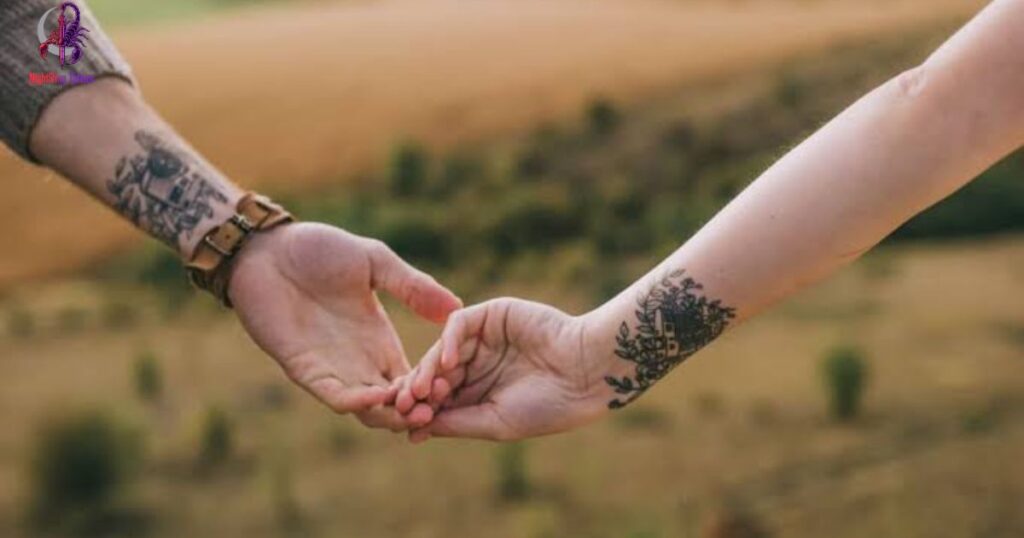
- Matching tattoos: Siblings, partners, and friends share designs. One pair of sisters combined a semicolon and a butterfly, with fingerprints as the wings.
- For a loved one: Some wear a name or symbol to honor a family member’s mental health journey.
Real Stories Behind Mental Health Tattoos
The Mighty collected stories from its community. A few themes stand out:
- One person covered a scar with a heart and a heartbeat line, as a reminder that they have reasons to keep going.
- Another marked 20 years since a depression diagnosis with a “H.O.P.E.” tattoo and a semicolon.
- A husband got a tattoo to show support for his wife’s bipolar disorder and anxiety.
The lesson is simple. Personal meaning matters more than any “official” symbol.
A Tattoo Is Not a Substitute for Mental Health Care
Ink can support healing. It can’t replace a therapist or a doctor. Consider reaching out if low mood, worry, or hopelessness lasts for weeks or affects daily life.
- 988: Call or text the 988 Suicide & Crisis Lifeline.
- NAMI HelpLine: 800-950-NAMI (6264) (NAMI)
- 911: For emergencies.
Mental Health Tattoo FAQs
What tattoo symbolizes mental health?
No single tattoo is official. The most common are the semicolon, green ribbon, lotus, butterfly, phoenix, and serotonin molecule. The best one is the symbol that fits your own story.
How do I get mentally healthy?
Start with small, steady habits. Sleep regularly, move your body, and spend time with people you trust. Limit alcohol. Talk to a therapist or doctor if symptoms last or get worse.
What does a 444 tattoo symbolize?
In angel number belief, 444 stands for protection, stability, and support. It is a spiritual meaning, not a medical one.
What does 777 mean in tattoos?
In spiritual circles, 777 often stands for luck, awakening, or completion. Some people also use it for a personal date or milestone.
What does the 222 444 tattoo mean?
Together, the numbers usually stand for balance (222) and protection (444). Many wearers also pick them for personal reasons, so ask what the combo means to them.
What is a tattoo for depression?
Popular choices are the semicolon, serotonin molecule, sunrise, lotus, and “This Too Shall Pass.” A tattoo can support healing, but it is not treatment.
Final Thoughts
A mental health tattoo works best when it holds a meaning only you fully know. Take your time with the design and the artist. Care for the ink as you care for yourself. And remember that ink supports your journey, while professional care treats it.
If you’re still unsure, give the idea a few weeks. Sketch it, wear a temporary version, and talk it over with someone you trust. A mental health tattoo should feel right on both good days and bad ones. Pair it with real support, like friends, a therapist, or a peer group. And if the hard days return, remember that help is available. Call or text 988 at any time.