
Fine line tattoos have become a favorite for people who want body art that feels delicate, refined, and personal without relying on heavy outlines or large areas of solid ink. These 25 Fine Line Tattoo Ideas cover everything from botanical sketches and celestial symbols to animals, meaningful lettering, portraits, and elegant geometric designs. The style is generally built around thin, precise linework and generous negative space, allowing the artwork to feel light on the skin.
One reason fine line work is so appealing is its versatility. A tiny flower can be placed on the wrist, a delicate phrase can follow the collarbone, or a larger botanical composition can travel along the forearm. But delicate does not mean effortless. Fine line tattoos leave very little room for mistakes, so design size, spacing, placement, and artist experience all matter when planning the finished piece.
If you’re looking for 25 Fine Line Tattoo Ideas before your next appointment, this guide gives you a broad range of inspiration while also covering practical considerations. You’ll learn about popular design directions, suitable placements, longevity, aftercare, and how to choose a concept that still looks intentional after the tattoo has healed.
What Makes Fine Line Tattoos Different?
Fine line tattooing focuses on delicate, controlled lines rather than thick outlines and heavy shading. The technique can be used for small symbols, botanical drawings, geometric artwork, script, portraits, and larger illustrative pieces. Because there is less visual weight, the finished tattoo often has a soft and understated appearance.
The key is not simply making every line as thin as possible. Current tattoo guidance increasingly emphasizes confident line weight, sufficient spacing, and a design that remains readable at its actual size. An ultra-thin design packed with tiny details can lose clarity much faster than a slightly stronger fine-line composition with good negative space.
1. Fine Line Wildflower
A single wildflower is one of the most versatile 25 Fine Line Tattoo Ideas because it can be simple, delicate, and meaningful at the same time. A thin stem with a few carefully drawn petals can create a natural look without requiring shading or color.
You can choose a flower based on its symbolism, your birth month, a favorite memory, or simply its appearance. The inner forearm, ankle, collarbone, and upper arm are particularly suitable for a narrow botanical design.
2. Fine Line Rose
A fine-line rose gives a classic tattoo subject a lighter and more contemporary appearance. Instead of heavy shading, the artist can use carefully controlled outlines to describe the petals and leaves.
The design can be tiny and understated or expanded into a larger botanical composition. If you want the tattoo to remain delicate, avoid cramming too many petals into a very small space.
3. Olive Branch
An olive branch works beautifully with fine line because its long, narrow shape naturally follows areas such as the forearm, collarbone, ribs, or ankle. Simple leaves can provide enough detail without making the design visually heavy.
The olive branch can represent peace, resilience, harmony, or a meaningful personal chapter. You can also customize the number and arrangement of leaves to give the tattoo a more personal appearance.
4. Fine Line Lavender
Lavender is another excellent botanical choice for someone who wants something graceful and understated. Its narrow stem and repeated small flowers create natural rhythm within a fine-line composition.
A lavender sprig can be placed vertically along the forearm or horizontally near the collarbone. Keeping the flowers slightly separated gives the design the negative space it needs to remain readable.
5. Botanical Leaf
A single leaf may look simple, but it can become an elegant piece of body art when drawn with confident linework. Different leaf shapes can also give the tattoo a completely different personality.
Try a eucalyptus leaf for a soft organic look, a fern for more intricate structure, or a simple branch for an understated design. Botanical fine-line tattoos remain a prominent direction in current tattoo work.
Celestial and Symbolic Fine Line Designs
Celestial imagery works especially well for 25 Fine Line Tattoo Ideas because moons, stars, planets, and constellations can be represented with relatively few lines. The designs can remain subtle while still carrying personal symbolism.
You can also combine celestial elements with other subjects. A moon beside a flower, a constellation above a mountain outline, or tiny stars around a meaningful word can create a custom design without adding excessive visual weight.
6. Crescent Moon
A crescent moon is an elegant option for anyone drawn to celestial imagery. It can symbolize change, cycles, intuition, mystery, or a new beginning.
The design can be completely plain or decorated with a few tiny stars. Behind the ear, wrist, ankle, and upper arm are popular choices for a discreet crescent.
7. Sun and Moon
Combining the sun and moon can represent balance, opposites, connection, or the relationship between different sides of life. A fine-line version can remain simple enough for a small placement.
Rather than creating two highly detailed objects, use clean outlines and a small amount of detail. This gives the design a lighter appearance and helps preserve separation between elements.
8. Constellation
A constellation can be based on a zodiac sign, a favorite star pattern, or simply an arrangement that looks beautiful. Small dots connected with delicate lines create a naturally airy composition.
Because the design relies heavily on spacing, avoid placing too many stars into a tiny area. A little extra skin between elements can make the finished tattoo much easier to read.
9. Tiny Planet
A small planet can represent curiosity, exploration, imagination, or a fascination with space. A simple circular outline with a thin ring can be enough.
You can personalize it by adding a tiny moon, star, or orbiting line. The forearm, ankle, shoulder, or upper arm can provide suitable space for this concept.
10. Fine Line Sun
A minimalist sun can symbolize optimism, energy, warmth, or a fresh start. Fine-line rays allow you to create a recognizable design without solid black areas.
For a more contemporary appearance, vary the length of the rays or leave a small opening in the circle. This can make a familiar symbol feel more custom.
Animal and Nature-Inspired Fine Line Tattoos
Animals are another strong category within 25 Fine Line Tattoo Ideas. Their silhouettes can often be simplified while remaining immediately recognizable, making them suitable for delicate tattooing.
The trick is choosing the right level of detail. A fine-line animal can look beautiful when the artist focuses on its most important features, but attempting a highly realistic miniature portrait may leave too much information competing for limited space.
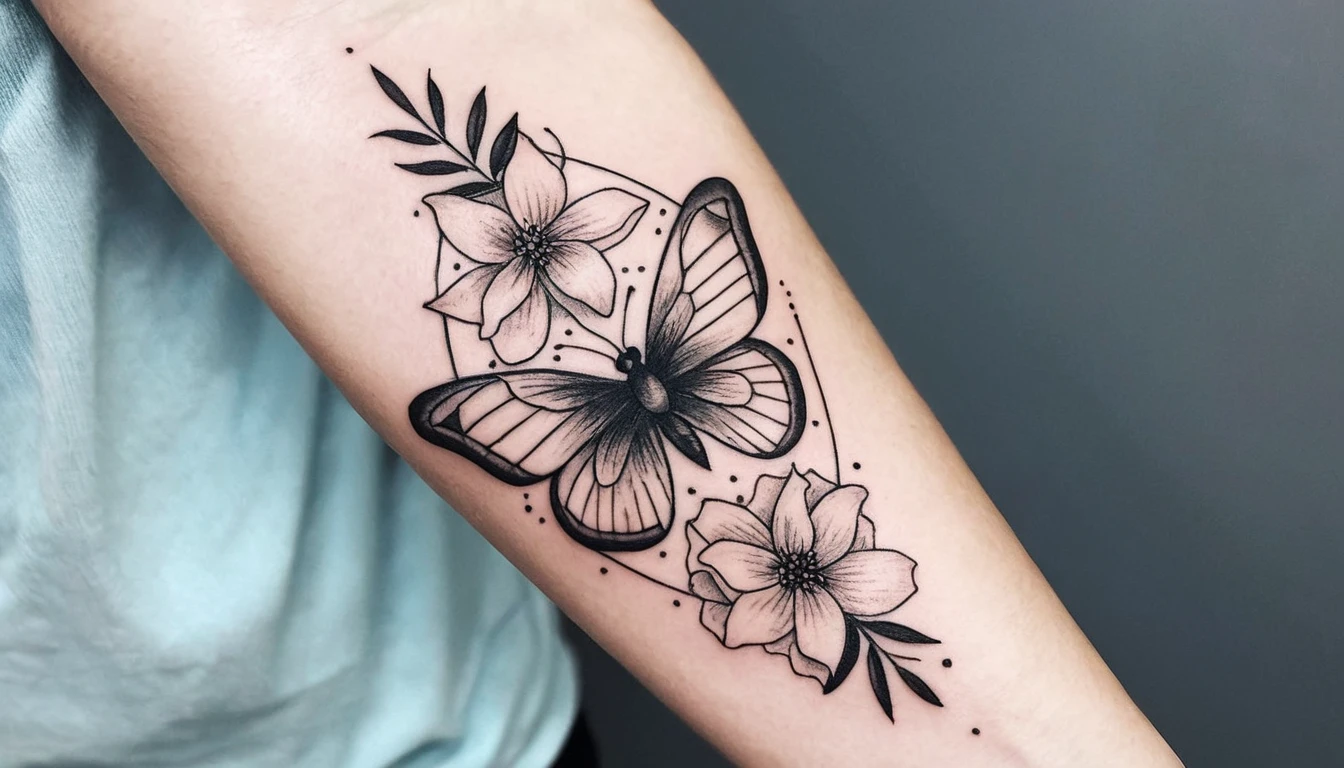
11. Fine Line Butterfly
A butterfly is naturally suited to delicate tattooing because its wings can be outlined without requiring heavy shading. It can symbolize transformation, freedom, growth, or a new chapter.
You can choose a symmetrical butterfly or make the wings slightly different for a more artistic appearance. A small butterfly looks particularly elegant on the wrist, shoulder, ankle, or forearm.
12. Fine Line Bird
A small bird in flight can represent freedom, independence, travel, or personal growth. The artist can create the silhouette with only a few carefully positioned lines.
For a more personal tattoo, choose a bird with a connection to your life. A specific species can add meaning while still keeping the overall artwork understated.
13. Fine Line Snake
A snake offers a more dramatic option while still working beautifully in a fine-line style. Its curved body naturally follows the shape of the arm, ankle, finger, or side of the torso.
A simple snake can represent transformation, resilience, renewal, or personal strength. Avoid overcrowding the design with tiny scales if you want the linework to remain clean.
14. Fine Line Cat
A cat can be represented with a simple continuous outline or a minimalist side profile. This is a particularly personal choice for pet owners who want to memorialize a beloved animal.
Instead of copying a generic cat silhouette, consider incorporating the distinctive shape of your own pet’s ears, tail, or posture. That small customization can make the tattoo much more meaningful.
15. Fine Line Mountain Landscape
A mountain outline can represent adventure, perseverance, nature, or overcoming a challenge. A simple silhouette usually works better than trying to reproduce every rock and tree in miniature.
For a personal touch, use the outline of a real mountain range that has significance to you. You can also add coordinates or a tiny sun without making the design excessively complicated.
Fine Line Tattoos With Personal Meaning
Some of the strongest 25 Fine Line Tattoo Ideas are based on memories rather than trends. Fine-line lettering, dates, handwriting, and small symbolic objects can turn a subtle tattoo into something deeply personal.
The advantage of keeping these designs simple is that the meaning doesn’t have to be obvious to everyone who sees them. A small date or symbol can carry a complete story for the person wearing it.
16. Handwritten Word
Using someone’s real handwriting can create an extremely personal tattoo. It might be a parent’s handwriting, a partner’s note, a child’s writing, or a phrase from an old letter.
For authenticity, provide the artist with a clear original reference. The artist can then adapt the handwriting while preserving its distinctive character.
17. Roman Numeral Date
A meaningful date can be converted into Roman numerals for a more subtle appearance. Birthdays, anniversaries, graduations, and other milestones can all work.
Make sure the date is checked carefully before tattooing. A clean font with enough space between characters will generally be easier to maintain than extremely compressed lettering.
18. Tiny Initial
A single initial can represent a loved one, your own identity, a family connection, or an important memory. It can be placed almost anywhere without dominating the surrounding area.
Consider choosing a simple typeface rather than extremely thin decorative script. The goal is to preserve readability as the tattoo naturally changes over time.
19. Fine Line Quote
A short quote can turn a few words into a daily reminder. Choose a phrase that genuinely matters to you rather than selecting something simply because it is popular online.
Because lettering needs enough space to remain readable, discuss the minimum practical size with your tattoo artist. Longer quotes may need a larger placement such as the forearm, ribs, or upper arm.
20. Coordinates
Coordinates are an excellent choice when you want to represent a meaningful location without displaying its name. They could point to your birthplace, childhood home, wedding venue, favorite travel destination, or another important place.
The numbers can stand alone or be paired with a tiny compass, landscape, or date. The result can be highly personal while remaining visually minimal.
Artistic and Geometric Fine Line Ideas
Fine-line tattooing isn’t limited to flowers and tiny symbols. Geometric and abstract designs can use thin lines to create artwork that feels modern, architectural, and sophisticated.
These concepts depend heavily on accuracy. Uneven spacing or inconsistent lines can become much more noticeable in geometric tattoos, so artist selection is particularly important.
21. Fine Line Geometric Circle
A simple circle can represent wholeness, continuity, cycles, or balance. It can also simply be an abstract shape chosen for its clean appearance.
You can use a single circle or place two or three circles together. Leave enough skin between overlapping elements so they don’t become visually crowded after healing.
22. Abstract Continuous Line
A continuous-line design can transform a face, body, flower, or abstract shape into a single flowing drawing. It creates an artistic appearance without needing heavy detail.
This is particularly effective on the forearm because the artist has enough room for the line to move naturally. A custom drawing can make the tattoo completely unique.
23. Fine Line Triangle
A triangle provides a strong geometric foundation for a delicate tattoo. It can represent balance, direction, transformation, or simply be used as an abstract design.
A single outline is often enough. You can add a tiny dot, another triangle, or a small gap in the line for a more distinctive composition.
24. Minimalist Compass
A compass is a natural choice for travelers and people who associate their lives with direction, independence, or adventure. Fine-line work can reduce it to a circle, needle, and a few directional marks.
A larger compass can include more details, while a tiny version can focus only on the needle. The forearm, upper arm, or calf can accommodate either approach.
25. Fine Line Portrait
A fine-line portrait can create a remarkably personal tattoo using delicate facial contours and minimal shading. It could depict a loved one, an artist, a historical figure, or even yourself.
Portraits are technically demanding because small inaccuracies can change facial features. Choose an artist with a strong portfolio of healed fine-line portraits rather than selecting solely from fresh tattoo photographs.
Best Places for Fine Line Tattoos
Placement is one of the most important considerations when planning fine-line artwork. Areas with relatively stable skin and lower friction can make it easier for delicate designs to remain readable over time. Inner forearms, upper arms, shoulders, and calves are often considered more predictable placements than constantly rubbed areas such as fingers, palms, and some parts of the feet.
Your choice should also depend on visibility. The wrist and forearm make a tattoo easy to see, while the upper arm or thigh can keep it more private. If your workplace has restrictions around visible tattoos, think about that before committing.
Popular placement options include:
- Inner forearm: Excellent for elongated botanical and symbolic designs.
- Upper arm: Easy to cover and generally offers a stable surface.
- Collarbone: Attractive for short phrases and horizontal designs.
- Shoulder: Suitable for small illustrations and botanical pieces.
- Calf: Provides room for slightly larger fine-line compositions.
- Ankle: Works well for small symbols but can experience friction.
- Ribs: Great for private artwork but may be more uncomfortable.
- Behind the ear: Suitable for very small designs with limited detail.
Do Fine Line Tattoos Fade?
One of the biggest questions surrounding 25 Fine Line Tattoo Ideas is whether delicate lines will remain delicate forever. Fine-line tattoos can age well, but they are not immune to natural fading or changes in line definition. Thin lines contain less visual weight than traditional bold outlines, so sun exposure, friction, skin movement, placement, and aftercare can have a noticeable effect over time.
Design decisions matter just as much as the technique. A fine-line tattoo with adequate negative space and relatively simple shapes generally has a better chance of remaining readable than an extremely tiny design packed with microscopic details. Current guidance repeatedly emphasizes spacing and appropriate scale rather than simply chasing the thinnest possible line.
This doesn’t mean you should avoid delicate tattoos. Instead, discuss realistic expectations with your artist. They may recommend slightly increasing the size, simplifying a detail, or changing the placement so the design has a better chance of aging gracefully.
Fine Line Tattoo Aftercare Tips
Fresh fine-line tattoos require the same basic care principles as other tattoos, but delicate details can make careful healing particularly important. Your tattoo artist’s specific instructions should always take priority because aftercare recommendations can vary depending on the technique, placement, and products used.
During healing, avoid unnecessary rubbing, scratching, picking, and prolonged exposure to conditions that can irritate the tattoo. Once the tattoo is completely healed, protecting it from excessive UV exposure can help slow fading. Sun exposure is specifically identified as an important factor in the long-term appearance of fine-line tattoos.
A few practical reminders:
- Follow the aftercare instructions provided by your artist.
- Don’t pick peeling or scabbing skin.
- Avoid unnecessary friction while the tattoo heals.
- Keep the area clean according to your artist’s instructions.
- Don’t expose a healing tattoo to excessive sunlight.
- After healing, use suitable sun protection when the tattoo is exposed.
- Ask your artist whether a touch-up is appropriate once healing is complete.
How to Choose the Right Fine Line Tattoo Artist
Fine-line tattooing rewards precision, so don’t choose an artist based only on a studio’s general tattoo portfolio. Look specifically for examples of fine-line work, particularly healed examples if the artist provides them.
Pay attention to whether lines look controlled, whether details remain separated, and whether the artist understands how to simplify a design without losing its identity. Fine-line work is technically unforgiving because there is less heavy shading or bold outlining to hide inconsistencies.
Before your appointment, discuss:
- Your preferred design and its meaning.
- The exact placement.
- Recommended minimum size.
- Line weight and amount of detail.
- How the tattoo may change as it heals.
- Whether the design should be simplified.
- Expected touch-up needs.
A good artist won’t simply copy an image you bring. They can adapt the concept to your anatomy and recommend changes that make the finished tattoo more practical.
Frequently Asked Questions
What is a fine line tattoo?
A fine line tattoo uses thin, precise linework to create delicate designs with relatively little visual weight. Common subjects include florals, animals, script, geometric artwork, portraits, and minimalist symbols.
Do fine line tattoos age well?
They can age well when the design has appropriate size, spacing, placement, and line weight. Very tiny details, friction, and sun exposure can make delicate work lose clarity faster.
What is the best placement for a fine line tattoo?
Inner forearms, upper arms, shoulders, and calves are often favorable choices because they provide relatively stable skin and room for readable linework. Fingers and other high-friction areas generally require more consideration.
Are fine line tattoos painful?
Pain varies by person and placement rather than simply by tattoo style. Fine-line sessions may involve less dense shading, but sensitive areas can still be uncomfortable.
Should fine line tattoos be very small?
Not necessarily. Fine line describes the character of the linework, not a requirement that the tattoo be microscopic. A slightly larger design can provide better spacing and help preserve delicate details over time.
Conclusion
These 25 Fine Line Tattoo Ideas show how versatile delicate tattooing can be. From roses, wildflowers, butterflies, and birds to celestial symbols, geometric artwork, handwriting, coordinates, and custom portraits, fine-line work can create something subtle without sacrificing personality or meaning.
The most successful fine-line tattoo isn’t necessarily the thinnest or smallest design possible. It is a carefully planned piece with enough space, an appropriate scale, thoughtful placement, and an artist who understands delicate linework. Before booking your appointment, refine your favorite concept, discuss realistic aging with your artist, and choose a design that you’ll still feel connected to long after the fresh-ink stage.
Keyword: 25 Fine Line Tattoo Ideas | Category: Tattoos | Site: darkpulsetattoos.com | Word count target: 1500+