

A fallen angel tattoo is a powerful design that combines beauty, mystery, and deep symbolism. It often features an angel with broken wings, a bowed head, dark feathers, or a dramatic pose. Some people choose this tattoo because they connect with its message of rebellion, while others see it as a symbol of personal struggles, emotional pain, or the journey toward becoming stronger.
The meaning of a fallen angel tattoo depends on the person wearing it. For some, it represents a difficult chapter in life and the strength to move forward. For others, it reflects independence, inner conflict, or the balance between light and darkness. Its detailed artwork and emotional appearance make it a popular choice for people who appreciate dark, gothic, and realistic tattoo styles.
If you are thinking about getting a fallen angel tattoo, there are many designs to consider. You can choose a small broken-wing tattoo, a realistic angel on your back, a black-and-grey sleeve, or a minimalist design with a personal meaning. This guide explores the symbolism, popular design ideas, placements, styles, costs, and aftercare tips to help you find the right tattoo.
What Is a Fallen Angel Tattoo?
A fallen angel tattoo depicts an angelic figure that has fallen from grace, lost its place in heaven, or experienced a dramatic change in its spiritual or personal journey. Artists often represent this idea through damaged wings, dark shading, a kneeling pose, or an expression of sadness.
The design draws inspiration from religious stories, literature, mythology, and modern gothic art. The figure of Lucifer is one familiar reference, but not every fallen angel tattoo represents Lucifer or Satan.
Many people choose this artwork as a personal symbol rather than a statement about religion. Its meaning can reflect a life-changing experience, a desire for independence, or the determination to recover after a difficult period.
Fallen Angel Tattoo Meaning
A fallen angel tattoo can carry several meanings. The right interpretation often depends on the pose, facial expression, wing design, and personal story behind the artwork.
1. Rebellion and Independence
A fallen angel is often associated with challenging authority and refusing to follow expectations. The image can represent someone who values independence and prefers to make their own decisions.
People who have taken an unconventional path may connect with this meaning. For them, the tattoo represents the courage to be different rather than trying to fit into every social expectation.
2. Struggle and Personal Growth
Broken wings can represent difficult experiences, setbacks, or moments when life did not go as planned. The angel’s appearance may reflect emotional pain without suggesting that the person has given up.
A fallen angel tattoo can remind the wearer that a difficult chapter does not have to define the rest of their life. It can represent learning from mistakes and finding the strength to continue.
3. The Balance Between Light and Darkness
The contrast between an angel’s original beauty and its fallen appearance can symbolize the different sides of human nature. People can experience kindness, anger, hope, fear, confidence, and doubt.
This design may appeal to someone who accepts that life and personality are complicated. Black wings, light surrounding the figure, or contrasting shading can make this meaning more visible.
4. Loss and Emotional Pain
A sad or kneeling angel can represent grief, heartbreak, loneliness, or the loss of an important relationship. The figure may appear isolated, with its head lowered and wings resting against its body.
Some people use this tattoo to remember a difficult period or a loved one they have lost. Adding a name, date, or meaningful phrase can make the design more personal.
5. Redemption and Hope
A fallen angel does not always represent defeat. It can also symbolize the possibility of change, forgiveness, and a new beginning.
An angel rising from the ground, opening its damaged wings, or reaching toward a beam of light can communicate hope after hardship. This version is suitable for someone who wants the tattoo to represent progress rather than pain alone.
6. Freedom and Self-Expression
Some wearers interpret the fallen angel as a figure that refuses to live according to someone else’s rules. Its wings can represent freedom, while the fall can represent the consequences of choosing an independent path.
This interpretation is personal rather than universal. The tattoo does not automatically mean that the wearer rejects religion or supports evil.
Popular Fallen Angel Tattoo Ideas

Choosing a specific design is easier when you know the feeling or story you want your tattoo to communicate. Here are some ideas to discuss with your tattoo artist.
1. Realistic Fallen Angel Tattoo
A realistic design uses detailed facial features, textured feathers, shadows, and carefully shaped anatomy. The angel may appear seated, kneeling, or looking toward the ground.
This style works especially well for medium and large tattoos because the artist has more room to create depth. The back, chest, thigh, and upper arm are common placement options.
2. Broken Wings Fallen Angel Tattoo
Broken or damaged wings are among the most recognizable elements of fallen angel artwork. They can represent vulnerability, loss, or the feeling of being unable to move forward.
You can choose a full angel figure or focus only on the wings. A wings-only design may be a better choice if you prefer a simpler tattoo with fewer details.
Read More: Spider Web Tattoo: Meaning, Designs, Ideas, and Best Placements
3. Dark Fallen Angel Tattoo
A dark fallen angel tattoo uses deep black shading, dramatic shadows, and a serious facial expression. Some designs include storm clouds, smoke, dark feathers, or a shadowy background.
This option suits people who like gothic artwork and bold black-and-grey tattoos. Make sure the darkest areas have enough separation so that the details remain visible as the tattoo ages.
4. Fallen Angel Back Tattoo
The back provides a large canvas for a full-figure angel with extended wings. An artist can create a dramatic scene with clouds, broken feathers, and light or shadow surrounding the figure.
A full-back design can also tell a story through several elements. Because the artwork may require multiple sessions, plan the composition and budget before beginning.
5. Fallen Angel Chest Tattoo
A chest tattoo can place the angel over the center of the chest or across one side. The design may include folded wings, a bowed head, or a symbolic object near the heart.
This placement can feel personal because the artwork sits close to the chest. Large, detailed pieces may take longer to complete, and the sternum or areas near the collarbone can be painful for some people.
6. Fallen Angel Forearm Tattoo
The forearm is a practical option for people who want to see their tattoo easily. A vertical composition can feature an angel from head to waist, a falling figure, or a detailed wing.
For a smaller forearm design, avoid adding too many tiny feathers or background elements. Clear outlines and balanced shading help preserve the artwork’s readability.
7. Fallen Angel Sleeve Tattoo
A sleeve can combine a fallen angel with clouds, feathers, chains, roses, or other symbolic elements. The artist can arrange the design to follow the natural shape of the arm.
A cohesive sleeve usually looks better than several unrelated images placed together. Decide on the main figure and visual theme before adding smaller details.
8. Kneeling Fallen Angel Tattoo
A kneeling angel often appears with its head lowered and wings hanging toward the ground. This pose can communicate sorrow, reflection, regret, or humility.
It can also represent a moment of change rather than permanent defeat. A simple background keeps attention on the figure’s posture and expression.
9. Fallen Angel with a Broken Halo
A broken halo adds another layer of meaning to the tattoo. It can represent lost innocence, a changed identity, or a complicated relationship with expectations.
The halo can sit above the head, appear cracked, or be incorporated into the background. This small detail can make a design more recognizable without requiring additional large elements.
10. Fallen Angel with a Sword
A sword can introduce themes of conflict, resistance, protection, or the struggle to regain control. The angel may hold the weapon, rest it beside the body, or point it toward the ground.
Think about the message you want the sword to communicate. A peaceful pose and a threatening pose can create very different impressions.
11. Weeping Fallen Angel Tattoo

A weeping angel features a lowered head, tears, and often partially folded wings. This design can represent grief, heartbreak, or the emotional weight of a difficult experience.
It may work well on the shoulder blade, upper arm, or thigh. A black-and-grey style can emphasize the expression without making the tattoo look overly crowded.
12. Fallen Angel with Black Feathers
Black feathers create a dark, dramatic appearance. They can be placed around the angel, falling through the air, or scattered across the background.
This idea can symbolize change, loss, or the darker side of a personal journey. It also works as a standalone feather tattoo if you prefer something smaller.
13. Fallen Angel with Roses
Roses add contrast between beauty and darkness. A dark angel surrounded by roses may represent love, heartbreak, resilience, or the complicated nature of relationships.
Black roses create a gothic appearance, while red roses add a stronger visual contrast. Choose flowers that support the meaning you want instead of adding decoration without a clear purpose.
14. Minimalist Fallen Angel Tattoo
A minimalist design uses simple outlines, a small silhouette, or a few carefully selected details. It may show a single broken wing, a tiny angel figure, or a falling silhouette.
Minimalist tattoos are often easier to place on the wrist, ankle, or upper arm. Keep the design simple enough that its lines will remain distinguishable over time.
15. Fallen Angel with a Quote
A short phrase can make a tattoo more personal. You might choose words about survival, freedom, growth, or starting again.
Examples include:
- “Still rising.”
- “Broken, not defeated.”
- “Through darkness, I grow.”
- “My scars tell my story.”
- “I found strength in the fall.”
Check the spelling, font, and placement carefully before the tattoo begins. Longer quotes need more space and can become difficult to read when the lettering is too small.
Fallen Angel Tattoo Ideas for Men
Fallen angel tattoos are not limited to any gender, but some people prefer bold designs with strong contrast and dramatic poses.
Popular ideas include:
- Full-back angel: A detailed figure with large wings and a dramatic background.
- Black-and-grey sleeve: An angel combined with clouds, feathers, and shadows.
- Chest angel: A large figure positioned over the chest.
- Fallen warrior angel: An angel holding a sword or surrounded by battle imagery.
- Forearm angel: A vertical design with realistic details.
- Broken-wing figure: A symbolic tattoo that focuses on struggle and resilience.
Choose the size and style based on your personal taste, body placement, and the level of detail you want. The design should feel meaningful to you rather than following a gender-based rule.
Fallen Angel Tattoo Ideas for Women
Women may prefer delicate linework, floral details, smaller figures, or realistic designs with soft shading. However, any fallen angel style can work for anyone.
Consider these options:
- Fine-line fallen angel: A delicate figure with simple wings.
- Angel with roses: A mix of floral beauty and dark symbolism.
- Small broken wing: A subtle reminder of growth after hardship.
- Weeping angel: A design that represents grief or emotional strength.
- Fallen angel thigh tattoo: A larger figure with detailed wings.
- Angel with a moon: A celestial design that emphasizes mystery and reflection.
The best choice depends on your preferred look and the meaning you want to express. You do not need to select a smaller or softer design simply because of your gender.
Small Fallen Angel Tattoo Ideas
A small fallen angel tattoo can communicate a meaningful idea without requiring a large area of skin. Simpler designs also make it easier to keep the composition clean.
Some options include:
- A tiny angel silhouette.
- One broken angel wing.
- A small fallen halo.
- A single dark feather.
- An angel kneeling in outline.
- A minimalist angel with folded wings.
- A small falling figure.
- A broken halo with a short word.
For small tattoos, focus on one main symbol. Tiny facial details, closely packed feathers, and complicated backgrounds may become difficult to distinguish as the tattoo ages.
Black and Grey Fallen Angel Tattoo
Black-and-grey tattoos are popular for this subject because they can create depth, contrast, and a dramatic atmosphere without using multiple colors.
The artist can use light grey for the wings, darker shading around the figure, and strong black areas to create separation. This approach can work for realistic portraits, gothic designs, and large compositions.
Before choosing this style, look at healed examples from the artist’s portfolio. Fresh tattoos may appear sharper and darker than healed work, so healed photos provide a more realistic idea of the final result.
Gothic Fallen Angel Tattoo
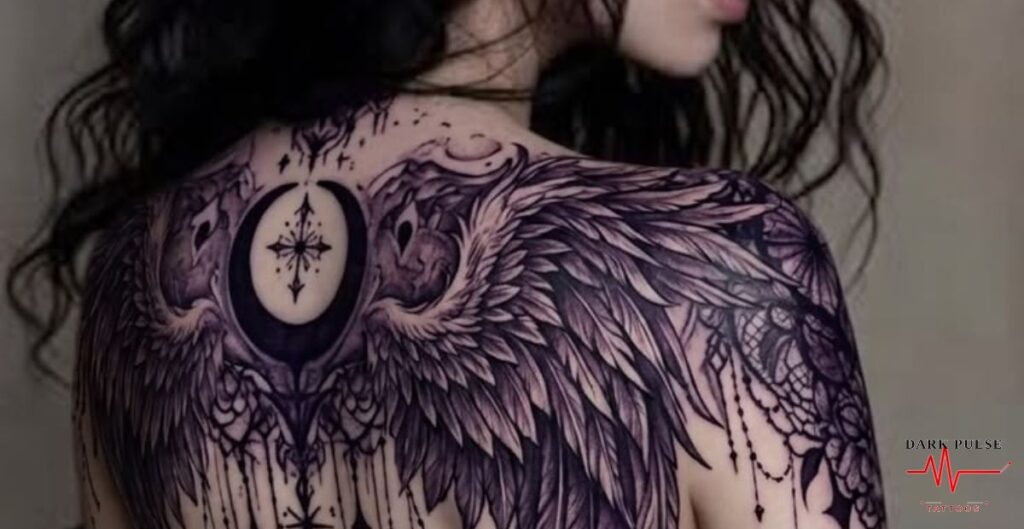
A gothic fallen angel tattoo often includes dark wings, dramatic architecture, roses, candles, chains, or a shadowy background. The design may look mysterious, romantic, or unsettling.
Gothic tattoos work particularly well when the elements follow a consistent visual theme. Instead of adding every possible symbol, choose two or three that reinforce your intended meaning.
Fallen Angel Tattoo vs. Dark Angel Tattoo
These terms are related, but they do not always describe the same idea.
| Feature | Fallen angel tattoo | Dark angel tattoo |
| Main concept | A fall from grace or a change in status | A mysterious or shadowy angelic figure |
| Common imagery | Broken wings, bowed head, falling pose | Black wings, dark clothing, strong shadows |
| Possible meaning | Rebellion, loss, regret, redemption | Mystery, strength, duality, independence |
| Typical style | Realistic, emotional, dramatic | Gothic, fantasy, minimalist, or realistic |
| Personal interpretation | Often tells a story of change or struggle | Often emphasizes mood or identity |
A dark angel can be designed without suggesting that the figure has fallen from heaven. A fallen angel, meanwhile, can look sorrowful, defiant, peaceful, or hopeful.
Best Body Placements for a Fallen Angel Tattoo
Placement affects the size, detail, visibility, and overall shape of your tattoo. Think about how the artwork will fit your body before deciding on a final design.
Back
The back is suitable for a full angel, wide wings, and detailed scenery. It offers plenty of room for a composition that tells a complete story.
Chest
The chest works well for centered figures, folded wings, and dramatic portraits. Consider how the design will fit your natural body shape and how much visibility you want.
Forearm
The forearm suits vertical figures, smaller angels, and broken-wing designs. It is a good option if you want to see the tattoo regularly.
Upper Arm and Shoulder
The upper arm and shoulder can accommodate medium or large designs. Curved wings can follow the shape of the shoulder, while a larger piece can extend toward the chest or back.
Thigh
The thigh offers a relatively large area for detailed figures, floral elements, and realistic shading. It is also easier to cover with clothing when needed.
Calf
The calf works well for vertical designs, standing angels, and falling figures. A design that follows the length of the leg can create a balanced appearance.
Wrist and Ankle
These placements are better suited to small symbols, simple wings, or minimalist outlines. Avoid squeezing a detailed full-figure angel into an area that cannot support the necessary detail.
Fallen Angel Tattoo Pain Level
Tattoo pain varies from person to person. Placement, session length, needle technique, and individual sensitivity can all affect the experience.
In general, fleshy areas such as the outer upper arm and thigh may feel more manageable for many people. Areas close to bone or with thinner skin, including the ribs, sternum, ankles, and some parts of the wrist, may be more uncomfortable.
A large fallen angel tattoo may require several sessions. Discuss breaks, session length, and aftercare with your tattoo artist, especially if you are planning a full-back piece or sleeve.
How Much Does a Fallen Angel Tattoo Cost?
The cost depends on the size, detail, artist’s experience, location, and number of sessions. A small, simple design will usually cost less than a realistic full-back tattoo.
| Tattoo type | General US price estimate |
| Small, simple design | 80–250 |
| Medium forearm or upper-arm design | 200–700 |
| Detailed large tattoo | 500–1,500 |
| Extensive sleeve or back piece | 1,500–4,000+ |
These are broad planning estimates, not guaranteed quotes. Some studios have minimum charges, and highly experienced artists may charge more. Ask the studio for an estimate based on your specific design before booking.
How to Choose the Right Fallen Angel Tattoo

A tattoo can stay with you for many years, so it is worth planning the design carefully.
Decide What the Tattoo Means to You
Start by choosing the message you want the design to express. Is it about independence, a difficult chapter, grief, hope, or the balance between light and darkness?
A clear meaning makes it easier to select the right pose, symbols, and style.
Choose a Suitable Size
Large tattoos provide room for detailed feathers, facial expressions, and backgrounds. Small designs are more suitable for simple silhouettes, wings, and symbols.
Do not reduce a complex reference image too much. Your artist can simplify the artwork so that the essential details remain clear.
Research Your Tattoo Artist
Look for an artist with experience in the style you want. A realistic angel requires different skills from a fine-line or traditional design.
Review healed tattoos, not only freshly completed work. Read the studio’s hygiene information and ask questions about the process before committing.
Customize Your Reference Image
Use reference images to communicate the mood and composition you like, rather than copying another person’s tattoo exactly. Ask the artist to create a design that fits your placement and personal meaning.
Think About Future Visibility
Consider your workplace, clothing preferences, and how visible you want the tattoo to be. A back or thigh tattoo is easy to cover, while a forearm tattoo is more visible in everyday life.
Fallen Angel Tattoo Aftercare Tips
Good aftercare helps your tattoo heal properly and protects the artwork.
- Follow the specific aftercare instructions provided by your tattoo artist.
- Wash your hands before touching the tattoo.
- Clean the area gently according to the artist’s instructions.
- Use only the recommended moisturizer or aftercare product.
- Avoid picking at scabs or peeling skin.
- Avoid soaking the tattoo in pools, hot tubs, or baths while it heals.
- Keep the healing tattoo out of direct sunlight.
- Contact a healthcare professional if you notice spreading redness, worsening pain, pus, fever, or other signs of infection.
Healing times vary. Do not rush back into activities that could irritate the tattoo, and follow your artist’s guidance throughout the healing process.
Are Fallen Angel Tattoos Religious?
Fallen angel tattoos have connections to religious stories and imagery, particularly interpretations of Lucifer and the fall from heaven. However, the tattoo is not necessarily a statement of religious belief.
Some people choose it because of its spiritual associations, while others focus on the artwork’s themes of rebellion, transformation, loss, or resilience. The same image can have different meanings for different people.
If the religious symbolism matters to you, research the specific figure or story you want to reference before choosing a design.
What Should You Know Before Getting a Fallen Angel Tattoo?
Before booking your appointment, take time to consider the following points:
- Meaning: Decide what the angel represents in your own life.
- Design: Choose between realistic, gothic, fine-line, or minimalist artwork.
- Placement: Make sure the design fits the body area and your visibility preferences.
- Size: Allow enough room for the details to remain clear.
- Budget: Include the cost of multiple sessions if necessary.
- Artist: Check the artist’s portfolio, hygiene practices, and experience.
- Religious associations: Understand that some people may interpret the imagery differently from you.
- Long-term care: Follow professional aftercare advice and protect healed tattoos from excessive sun exposure.
A thoughtful design is more likely to remain meaningful to you than one selected only because it is trending.
Frequently Asked Questions About Fallen Angel Tattoos
1. What does a fallen angel tattoo symbolize?
A fallen angel tattoo commonly represents rebellion, loss, personal struggle, and the balance between light and darkness. It can also symbolize redemption, independence, or the strength to recover from difficult experiences.
2. Is a fallen angel tattoo a symbol of evil?
Not necessarily. Although some designs draw on stories about Lucifer or other fallen figures, many people use the image to express personal growth, emotional conflict, or individuality.
3. What does a fallen angel tattoo mean for a man?
Its meaning is not gender-specific. A man might choose it to represent independence, resilience, regret, or a personal transformation, but the interpretation depends on the individual.
4. What does a broken-wing fallen angel tattoo mean?
Broken wings can symbolize vulnerability, lost opportunities, hardship, or a major life change. For some wearers, they also represent the possibility of healing and moving forward.
5. Where is the best place for a fallen angel tattoo?
The back and chest are suitable for large, detailed designs, while the forearm, upper arm, thigh, and calf can work for medium-sized pieces. The best placement depends on the design, pain tolerance, and desired visibility.
6. Are fallen angel tattoos suitable for women?
Yes. Fallen angel tattoos can suit anyone. Popular options include fine-line angels, floral designs, realistic figures, broken wings, and gothic artwork.
7. Can I get a small fallen angel tattoo?
Yes. A small silhouette, broken wing, fallen halo, or simple angel outline can work well. Keeping the design uncomplicated helps preserve its clarity.
8. Does a fallen angel tattoo represent Lucifer?
It can, but it does not always do so. Some designs specifically depict Lucifer, while others use fallen angel imagery as a broader symbol of struggle, independence, or change.
9. What colors work best for a fallen angel tattoo?
Black and grey are popular because they create strong contrast and dramatic shading. Some designs also use red, muted blue, or gold accents to highlight flowers, light, or a halo.
10. How long does a fallen angel tattoo take?
A small design may take a relatively short appointment, while a realistic angel or full sleeve can require several hours or multiple sessions. The artist can provide a more accurate estimate after reviewing the design and placement.
11. Can a fallen angel tattoo represent healing?
Yes. A design showing an angel rising, opening its wings, or reaching toward light can represent recovery, hope, and personal growth after a difficult period.
12. Are fallen angel tattoos permanent?
Traditional tattoos are intended to be permanent, although their appearance changes over time. Choose a design carefully, work with a qualified artist, and follow aftercare instructions to support good healing.
Conclusion
A fallen angel tattoo combines striking artwork with symbolism that can be deeply personal. It may represent rebellion, emotional struggle, loss, independence, or the ability to rise after a difficult experience. Broken wings, dark feathers, a fallen halo, and a thoughtful pose can each help communicate a different message.
The best fallen angel tattoo is one that matches your own story and preferred style. Whether you choose a small minimalist symbol, a gothic forearm piece, or a realistic design across your back, take time to plan the size, placement, and details with a skilled tattoo artist.