

Viking tattoos are a popular choice for men who want body art connected to strength, courage, protection, mythology, and adventure. Norse-inspired designs can feature legendary gods, warriors, mythical creatures, ancient symbols, runes, weapons, ships, and traditional knotwork. Each concept can be adapted into a bold modern tattoo while still drawing inspiration from Norse mythology and Scandinavian art.
What makes Viking tattoo ideas especially interesting is the range of styles available. You can choose a powerful Thor tattoo, a detailed Odin portrait, a mysterious Valknut, an intricate Yggdrasil, or a simple Mjölnir symbol. Large designs can become full sleeves or back pieces, while smaller symbols can work beautifully on the forearm, chest, calf, or shoulder.
If you are searching for inspiration, this guide covers 34+ Viking tattoo ideas for men, including powerful Norse symbols, gods, warriors, mythical creatures, runes, and meaningful combinations. You’ll also find placement ideas and practical tips for choosing a design that feels personal rather than simply copying a popular image.
34+ Viking Tattoo Ideas for Men
Viking-inspired tattoos can range from simple geometric symbols to elaborate mythological scenes. Before choosing one, think about the meaning you want behind the design and whether you prefer historical Norse symbolism or a modern fantasy interpretation. Popular concepts include Mjölnir, Yggdrasil, Valknut, Vegvisir, ravens, wolves, runes, longships, and Norse gods.
It is also worth researching the history of individual symbols. Not everything commonly marketed as a “Viking symbol” actually dates to the Viking Age. For example, the Vegvisir comes from later Icelandic magical tradition rather than the Viking Age itself. Knowing these distinctions can help you create a more informed and respectful Norse-inspired tattoo.
1. Mjölnir Thor’s Hammer Tattoo
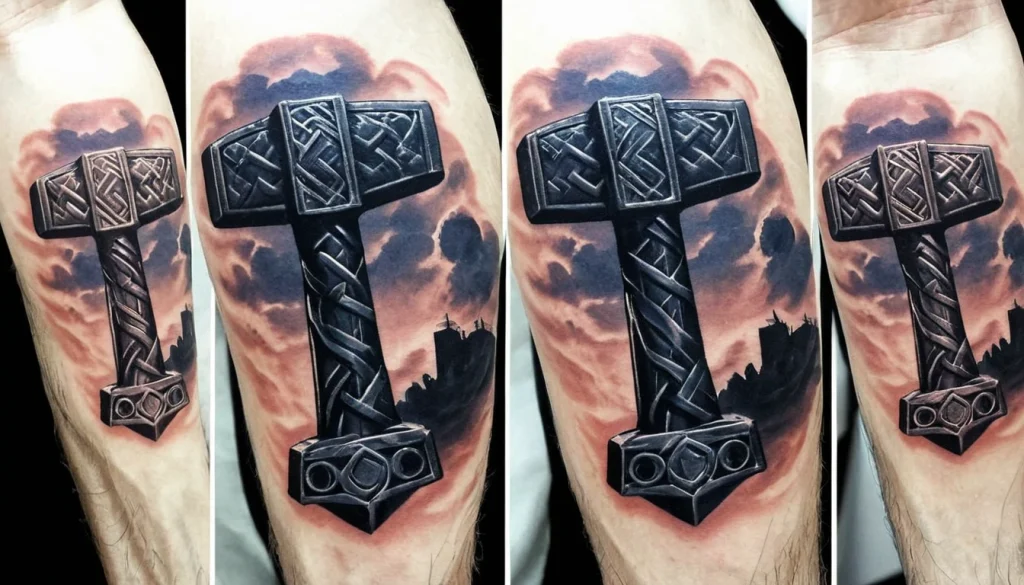
Mjölnir, Thor’s hammer, is one of the most recognizable Norse-inspired tattoo choices. It can represent strength, protection, courage, and the power to defend what matters most.
2. Viking Warrior Tattoo
A Viking warrior portrait creates a dramatic masculine tattoo with plenty of room for armor, weapons, shields, and weathered facial details. Black-and-gray realism works especially well for this concept.
3. Odin Tattoo

A detailed Odin portrait can feature his distinctive appearance, long beard, and one-eyed expression. Add ravens, runes, or a spear to build a larger mythological composition.
4. Yggdrasil Tattoo
Yggdrasil, the World Tree, is one of the most visually impressive Norse tattoo concepts. Its roots and branches can represent connection, growth, life cycles, and the interconnected worlds of Norse cosmology.
5. Valknut Tattoo
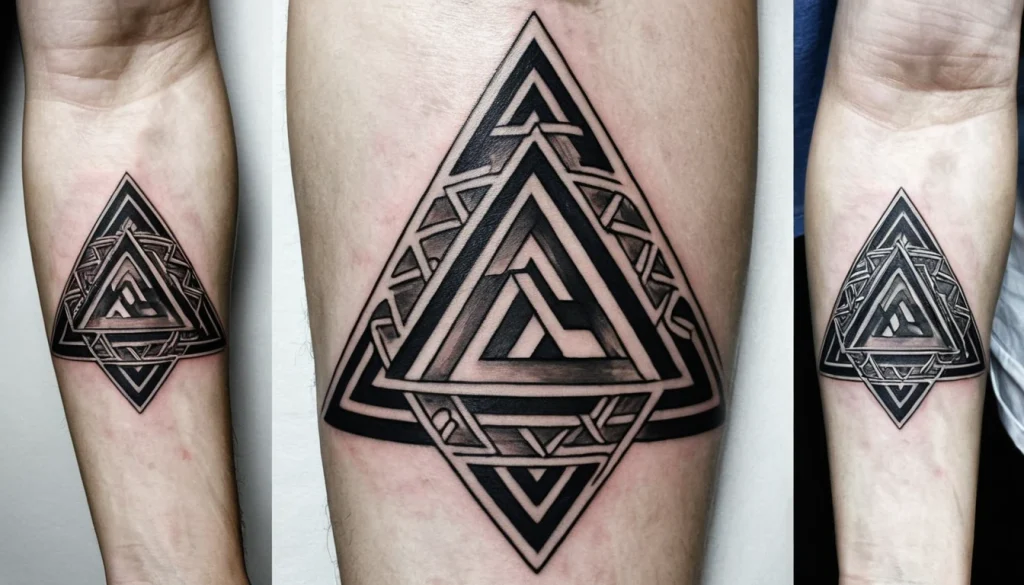
The Valknut consists of three interlocking triangles and is strongly associated with Odin and themes surrounding death and the afterlife. Because its exact historical meaning remains debated, research its symbolism carefully before choosing it.
Read Also: Coolest Sleeve Tattoos for Women
6. Vegvisir Tattoo
The Vegvisir is often called the Norse or Viking compass and is associated with guidance and finding one’s way. It is a popular modern Norse tattoo, although its documented origin is later Icelandic magical tradition rather than the Viking Age.
7. Helm of Awe Tattoo
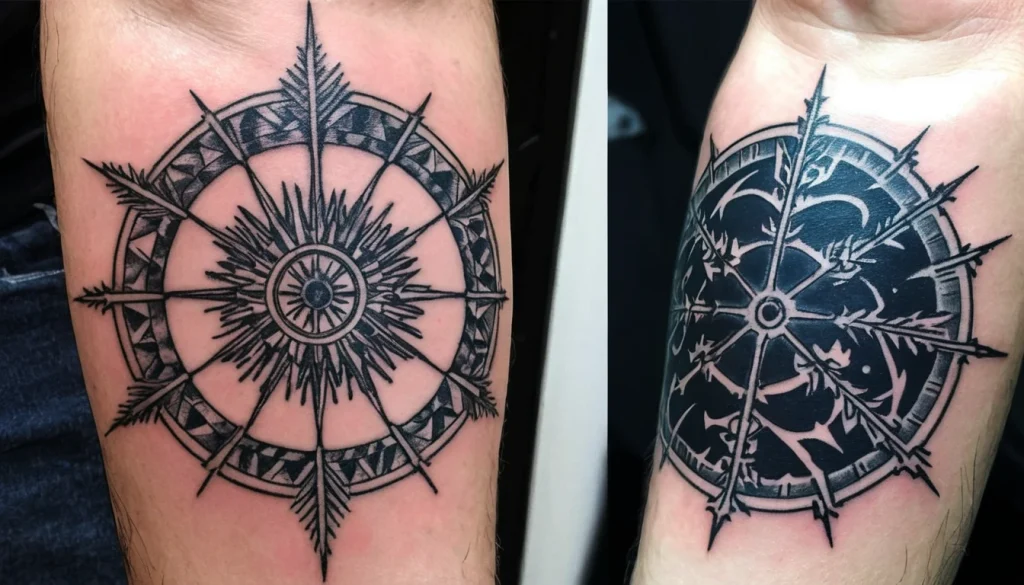
The Helm of Awe, or Aegishjalmur, is a radial symbol associated with protection and fearlessness. Its symmetrical structure makes it particularly effective as a chest, forearm, or upper-back tattoo.
8. Viking Rune Tattoo
A single meaningful rune can create a small but highly personal tattoo. Choose the rune based on its historical meaning rather than selecting characters simply because they look attractive.
9. Elder Futhark Tattoo
A series of Elder Futhark characters can be arranged vertically, horizontally, or around a larger Norse design. Make sure any inscription is accurately translated and written before permanently tattooing it.
10. Huginn and Muninn Tattoo
Odin’s ravens, Huginn and Muninn, are commonly interpreted as representing thought and memory. Two ravens can be placed symmetrically across the chest or shoulders for a powerful composition.
11. Fenrir Wolf Tattoo
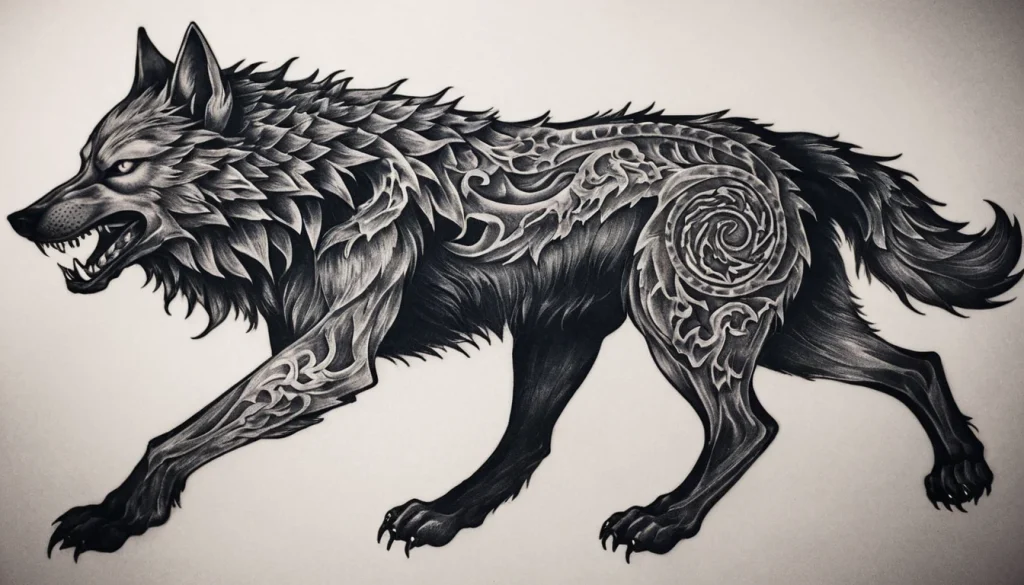
Fenrir is one of the most famous wolves in Norse mythology. A fierce Fenrir tattoo can represent primal power, rebellion, strength, and an unstoppable force.
12. Viking Wolf Tattoo
A wolf does not have to depict Fenrir specifically. A Nordic-style wolf portrait can create a bold tattoo representing loyalty, independence, instinct, and strength.
13. Jörmungandr Tattoo

The Midgard Serpent, Jörmungandr, is a powerful choice for a circular or wrapping tattoo. Its long body naturally works around an arm, shoulder, thigh, or torso.
14. Viking Raven Tattoo
A single raven creates a simpler alternative to a full Huginn and Muninn design. It can represent intelligence, observation, mystery, or a connection to Odin’s mythology.
15. Valkyrie Tattoo
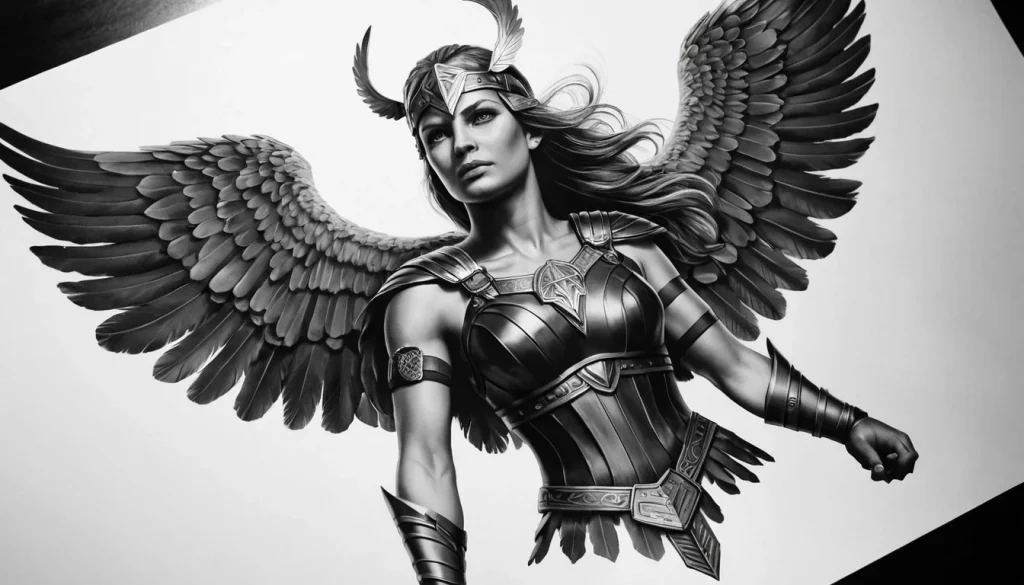
A Valkyrie tattoo can feature a powerful female warrior wearing armor and carrying a weapon. Wings, horses, shields, and Norse scenery can turn the concept into a detailed full-arm or back composition.
16. Viking Longship Tattoo
A Norse longship is an excellent choice for men who connect with travel, exploration, adventure, and the sea. Add waves, mountains, clouds, or runic details to create a complete scene.
17. Viking Shield Tattoo
A round Viking shield creates a bold circular composition that can stand alone or become the centerpiece of a larger sleeve. Norse knotwork and runes can be incorporated around its edge.
18. Viking Axe Tattoo
A Viking axe tattoo can symbolize strength, determination, battle, and warrior heritage. A realistic axe can be paired with a shield, runes, or Nordic knotwork.
19. Viking Sword Tattoo
A sword provides a strong vertical tattoo design for the forearm, calf, or side of the body. Norse-inspired patterns on the handle can give it a more distinctive appearance.
20. Viking Helmet Tattoo
A detailed Viking-inspired helmet can create a bold masculine tattoo, especially when combined with a warrior portrait or Norse symbols. For historical accuracy, avoid assuming every horned helmet represents actual Viking equipment.
21. Norse Knotwork Tattoo
Interwoven knotwork creates a distinctly Nordic visual style. The continuous lines can form an armband, sleeve border, chest design, or decorative background.
22. Viking Bear Tattoo
A bear can represent physical power, courage, resilience, and warrior energy. A Nordic bear rendered in blackwork or realism can make an especially strong upper-arm tattoo.
23. Sleipnir Tattoo
Sleipnir, Odin’s eight-legged horse, is an unusual choice for men who want something beyond the most common Norse symbols. A detailed horse surrounded by runes or clouds can create a dramatic mythological scene.
24. Jörmungandr and Mjölnir
Combining the Midgard Serpent with Thor’s hammer creates a strong mythological composition. The serpent can curve around the hammer to produce a visually balanced tattoo.
25. Odin and Ravens Tattoo
An Odin portrait surrounded by Huginn and Muninn gives you a larger storytelling tattoo. It works particularly well across the chest, upper arm, or back.
26. Thor and Mjölnir Tattoo
A realistic Thor portrait holding Mjölnir can become the centerpiece of a large Norse sleeve. Lightning, clouds, and runes can add depth without distracting from the main figure.
27. Yggdrasil and Runes Tattoo
Combining Yggdrasil with carefully researched runes can create a meaningful tree-of-life composition. Place the runes along the trunk, roots, or surrounding border.
28. Viking Compass and Longship
Pairing a Vegvisir with a longship creates a travel-focused design. The compass can represent direction while the ship reinforces themes of exploration and journey. Remember that the Vegvisir is a later Icelandic symbol, not a confirmed Viking Age artifact.
29. Viking Skull Tattoo
A skull combined with Norse symbols creates a darker tattoo aesthetic. Add a raven, axe, helmet, or knotwork to develop a complete composition.
30. Norse Wolf and Raven Tattoo
A wolf and raven combination can create an intense black-and-gray composition. It can symbolize different aspects of strength, intelligence, instinct, and the supernatural world of Norse mythology.
31. Viking Rune Band
A circular band of carefully selected runes can work around the upper arm, wrist, or calf. Because inscriptions can have different meanings depending on context, verify the translation before tattooing.
32. Nordic Mountain Tattoo
A mountain landscape with runes, a raven, or a small sun creates a more subtle Scandinavian-inspired tattoo. It is ideal for men who prefer nature imagery over warrior portraits.
33. Viking Ship and Storm Tattoo
A longship battling waves beneath dark clouds creates a dramatic scene representing adventure and perseverance. This concept works best on a large canvas such as the back, thigh, or upper arm.
34. Norse Gods Sleeve
A full Norse mythology sleeve can combine several figures and symbols into one connected story. Odin, Thor, Mjölnir, ravens, Yggdrasil, wolves, runes, and clouds can be arranged so each element flows naturally into the next.
35. Minimalist Mjölnir Tattoo
For a smaller Viking tattoo, a simple Mjölnir outline can provide strong symbolism without requiring a large design. The forearm, wrist, chest, or upper arm can all work for a compact version.
36. Viking Knotwork Armband
A knotwork armband gives you a clean way to incorporate Nordic-inspired patterns without committing to a large mythological scene. Continuous interlacing can wrap naturally around the bicep or forearm.
Powerful Viking Tattoo Meanings
Norse-inspired tattoos can carry different meanings depending on the symbol, mythology, historical context, and personal interpretation. Common themes include strength, protection, courage, wisdom, fate, resilience, connection, and exploration.
Rather than choosing a symbol only because it looks powerful, consider what you want the tattoo to remind you of. Mjölnir may appeal to someone focused on protection and strength, Yggdrasil can represent connection and growth, while Odin’s ravens may suit someone drawn to thought and memory.
Strength and Power
Mjölnir, Viking axes, warriors, bears, and wolves can all create a visual representation of physical or inner strength.
Protection
The Helm of Awe and Mjölnir are commonly associated with protective symbolism. A protective tattoo can serve as a personal reminder of resilience and security.
Wisdom
Odin, his ravens, and several Norse symbols can be connected with knowledge, thought, memory, and wisdom.
Fate and Destiny
The Valknut and other Norse concepts are often connected with fate, death, and the afterlife. However, the precise historical interpretation of some symbols is uncertain, so avoid treating modern interpretations as undisputed historical facts.
Growth and Connection
Yggdrasil is an excellent choice if you want your tattoo to represent roots, family, personal development, or the interconnectedness of life.
Adventure and Exploration
Longships, waves, compasses, mountains, and travel-related compositions can represent exploration and the courage to move into unfamiliar territory.
Best Viking Tattoo Placements for Men
Placement can dramatically change the appearance of a Viking tattoo. Small symbols such as Mjölnir, Valknut, or runes can fit naturally on the forearm, while detailed mythology scenes often need the space provided by the back, chest, or full sleeve.
Think about the shape of your chosen design before deciding where to place it. Circular symbols work naturally on the chest or shoulder, long serpents can wrap around limbs, and tall trees or runic inscriptions can follow vertical areas such as the forearm or spine.
Viking Forearm Tattoo
The forearm is one of the most flexible placements for Norse symbols. Mjölnir, Valknut, Vegvisir, runes, ravens, and knotwork can all be adapted to its long shape.
Viking Sleeve Tattoo
A full sleeve gives you enough space to combine several elements into one story. A dragon or wolf can flow between portraits, symbols, clouds, waves, and knotwork.
Viking Chest Tattoo
The chest is ideal for broad symmetrical designs such as the Helm of Awe, ravens, Mjölnir, or a large Norse warrior. It also provides room for detailed shading.
Viking Back Tattoo
The back offers the largest canvas for a Yggdrasil, Odin portrait, Viking ship, or complete mythology scene. Roots, branches, waves, and surrounding symbols can be incorporated without making the composition feel cramped.
Viking Shoulder Tattoo
The shoulder’s rounded shape works well for circular symbols, ravens, wolves, shields, and knotwork. It can also serve as the beginning of a full sleeve.
Viking Calf Tattoo
A vertical Norse design can follow the calf naturally. A sword, axe, raven, serpent, or longship can be adapted to the area’s shape.
Viking Thigh Tattoo
The thigh offers plenty of space for realistic portraits and large mythological scenes while remaining easy to cover with clothing.
How to Choose the Right Viking Tattoo
Start by deciding whether you want a symbol, character, animal, weapon, or complete mythological scene. Then research the historical background of your chosen design. This is especially important because some symbols commonly labeled “Viking” actually come from later Scandinavian or Icelandic traditions.
Your tattoo should also match your preferred artistic style. Blackwork creates strong graphic contrast, realism can make Norse gods and warriors look dramatic, while traditional knotwork provides a more ornamental appearance. Choose an artist who has experience with the exact style you want.
Decide on the Meaning
Choose a symbol that represents something genuinely important to you. A meaningful tattoo is less likely to feel outdated than one chosen only because it is currently popular.
Research the Symbol
Look beyond social media descriptions and check reliable historical or cultural references. This is particularly important for runes and symbols with disputed or modern interpretations.
Match the Design to the Placement
A circular Valknut may suit the chest or shoulder, while Yggdrasil needs more vertical or expansive space. Let the body’s natural shape influence the composition.
Choose the Right Style
Decide whether you prefer realism, blackwork, traditional Nordic knotwork, minimalist linework, or a large illustrative scene. Your artist can then adapt the concept accordingly.
Check the Artist’s Portfolio
Look for healed examples of comparable work. A tattoo artist who regularly creates realistic portraits may not necessarily be the best choice for intricate knotwork or runic designs.
Important Things to Know About Norse Symbols
Modern Viking tattoo culture includes many symbols that are frequently grouped together even though they come from different periods and traditions. The Vegvisir, for example, is documented in later Icelandic magical manuscripts, while many other Norse motifs have roots in Viking Age art and mythology.
Some symbols can also have modern associations that go beyond their original historical context. The Valknut has legitimate historical connections to Norse imagery, but its exact meaning is debated, while certain runes have been appropriated by extremist groups. Researching your chosen symbol can help you avoid accidentally communicating a meaning you did not intend.
Verify Rune Translations
Never rely on an online translation alone when getting permanent runic lettering. Have the wording and historical context checked by someone knowledgeable before your appointment.
Understand Historical Context
Calling every Nordic symbol “Viking” can blur important distinctions. A little research can make your tattoo more accurate and meaningful.
Be Careful With Modern Associations
Some symbols have been adopted or misused by extremist movements. If a symbol has controversial modern associations, consider discussing alternatives with your tattoo artist or a knowledgeable historian.
FAQs
What is the most popular Viking tattoo for men?
Popular choices include Mjölnir, Yggdrasil, Valknut, Vegvisir, Odin, ravens, wolves, and Viking warriors. The best option depends on whether you prioritize symbolism, mythology, or visual impact.
What does a Viking tattoo symbolize?
Viking tattoos can symbolize strength, courage, protection, wisdom, resilience, fate, connection, or adventure. The specific meaning depends on the symbol and the personal story behind the tattoo.
What is the most powerful Norse symbol?
Mjölnir, the Helm of Awe, Yggdrasil, and the Valknut are among the most recognizable powerful Norse-inspired symbols. Their historical meanings and interpretations are not identical, so choosing one should depend on the message you want to convey.
Where should a man get a Viking tattoo?
The forearm, chest, back, shoulder, sleeve, calf, and thigh are excellent choices. Small symbols work well on smaller areas, while detailed mythology scenes need a larger canvas.
Is Vegvisir actually a Viking symbol?
Not in the strict historical sense. The Vegvisir is documented in later Icelandic magical tradition rather than being a confirmed Viking Age symbol, although it has become extremely popular in modern Norse-inspired tattoo culture.
Conclusion
Viking tattoos offer an impressive combination of mythology, symbolism, history, and bold visual design. From Mjölnir and Valknut to Yggdrasil, Odin, ravens, wolves, longships, and Norse runes, there are countless ways to create a tattoo that feels powerful and personal. The right design can represent strength, protection, courage, wisdom, adventure, or a meaningful connection to Norse mythology.
Before getting your tattoo, research the symbol carefully and decide what you want it to represent. Choose a placement that gives the artwork enough room, select an artist experienced in your preferred style, and verify any runic writing or historical references. With thoughtful planning, your Viking tattoo can become much more than an impressive design—it can carry a story and meaning that remains important for years to come.